

SHARE:
Traditional Balinese cuisine you must try!
The ‘island of the Gods’ is known for a great many things – incredible scenery, rich culture and abounding biodiversity, but what one shouldn’t overlook is its cuisine. Indonesia contains thousands of islands with differing cultures, so the diversity of Balinese cuisine should come as no surprise.
Influenced by Indian and Chinese cuisine, Bali’s most renowned dishes are an amalgamation of the great food that preceded it, offering a plentiful assortment of indulgences made rich by the heavy use of local herbs and spices, and traditionally eaten during the colourful Hindu ceremonies that punctuate life on the Indonesian island.
While there are some excellent vegetarian options, the Balinese are known to be meat lovers, so expect a full range of meat-based dishes on the menu!

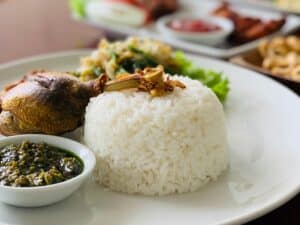

Babi Guling
Traditionally a ceremonial celebratory dish, Babi Guling is a spit-roasted whole pig that has become Bali’s staple food for Indonesians and foreign tourists. When translated, Babi Guling means ‘pork roll’, deriving from how the pork (babi) is slowly rolled (guling) above the fire.
Before cooking, the pork is brined and rubbed with a smorgasbord of spices. When served, the crispiness of the skin is preserved, and the meat is finely shredded into huge piles of crispy crackling, accompanied by sides of rice and salad, as well as white meat and blood sausage.
Betutu
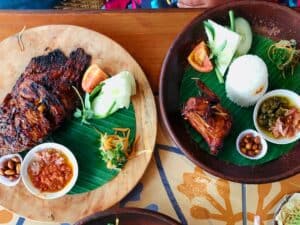
Betutu is the slow-cooked equivalent of Bali’s Babi Guling (roast suckling pig). Another traditional dish originating from Gilimanuk (Bali’s harbour city), it is a slow-cooked chicken dish with various Indonesian spices that give it a delicious and mouth-watering aroma.
It’s rumoured to have once been the king’s favourite meal, so it’s no wonder this ranks high in the must-try cuisine of Bali! The meal takes at least eight hours to prepare. The taste is worth it, though, because that long process yields a rich flavour in every bite.
Nasi Varieties
Chances are if you’ve investigated Balinese cuisine you’ve heard the word nasi thrown around quite liberally. There are many dishes prefaced with this moniker. That’s because nasi simply means rice, and rice is a classic staple of the Balinese diet.
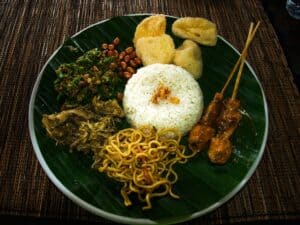
Starting with Nasi Campur Bali – a dish typically served with vegetable salad (urap), shredded meat, and sate lilit (Bali’s signature food). Typically coming in three variants: Nasi Campur Babi (pork), Nasi Campur Ayam (chicken), and Nasi Campur Pedas (spicy).
Then we have Nasi Jinggo, which uses a cone-shaped banana leaf to scoop rice with shredded chicken, sambal goreng, tempeh, and noodles. A unique treat chock-full of carbs and protein.
Additionally, there’s Nasi Tepeng – a savoury breakfast dish of rice porridge served in chicken broth and mixed with shredded chicken cooked with lemongrass, kaffir lime, galangal, and chilli, served with such condiments as fresh coriander, kecap manis (sweet soy sauce) and fried shallots.
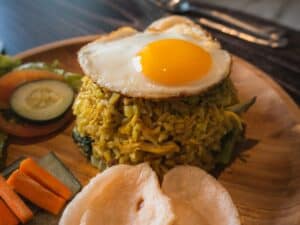
And finally, of the popular nasi dishes there remains Nasi Goreng, which is made by stir-frying cooked rice with a combination of meats and vegetables, ranging from scrambled eggs, diced beef, strips of chicken, shrimp, anchovies, lamb, crab, green peas, onions, shallots and a blend of kecap manis (sweet soy sauce) and hot chilli sauce.
Lawar
Lawar is primarily made from coconut gratings to which finely chopped meat, vegetables, spices and coconut milk are added. There are typically two types of lawar: red and white. The red gets its colour from animal blood added to the mixture, which adds a certain savoury flavour. White lawar, on the other hand, doesn’t contain blood and often substitutes meat with jackfruit.
Tum
Housed inside a wrap made of a banana leaf, Tum consists of minced chicken or beef, combined with mashed spices and herbs such as garlic, shallots, chillis, bay leaves, gingers, lemongrass and more. The locals like to mince the meat they use for tum Bali to ensure the flavor seeps well into the dish.
Bubur mengguh
Bubur mangguh is a Balinese rice porridge that originates from Tedjakula village. This savoury dish is an important meal for Balinese people as it’s one of the compulsory treats served at traditional festivals or ceremonies. This dish consists of rice porridge, peanuts, chili peppers, shredded chicken, and urab, making it rather unique.
Typically cooked with coconut oil, salt, and bay leaves, so you can still eat it without any additives. Once the porridge is completed, additional spices such as shallot, garlic, candlenut, chili pepper, burnt turmeric, pepper, and salt are added into the mix.
Sate varieties
Not dissimilar to the nasi varieties, you may have heard of Balinese dishes prefaced with ‘sate’, another seemingly ambiguous foodstuff. However, it simply refers to skewered meat (satay), a very common and well-loved food tradition in Bali.
Some of the most popular varieties include Sate Lilit – instead of skewered chunks of meat, it’s minced meat wrapped (lilit) around a bamboo or lemongrass stick. Sate lilit is typically made from tuna, but some restaurants offer chicken meat as well.
Sate Plecing is similar but made from pork rather than tuna, and served in sambal plecing: spicy (or sweet) sauce made from chili pepper, shrimp paste, and tomato with optional sugar for the sweet variant. It is often extremely spicy, which is why there are now restaurants offering sweet variants.
There’s also Sate Lembat, which utilises minced meat pounded in a mortar and pestle with young grated coconut and a bumbu, or spice mixture, accompanied with shrimp paste-based sambal “matah”, meaning raw or alive.
It’s not difficult to see why Bali is considered a hub of exquisite cuisine. Stepping out of your comfort zone and trying new foods – especially those patently unfamiliar – is a great way to expand your horizons and open the mind (and mouth)!
Not only is trying these recipes a very memorable experience, if you like them enough, they’re replicable at home! Albeit with some minor ingredient substitutions for some of the dishes.
Odyssey World has a whole selection of Bali and Indonesia itineraries to help you find that exact getaway you’re looking for! Plus, our newly launched series of Great Culinary Escapes starts this month with a 10 night luxury tour to Malaysia. Would you join us on a Great Culinary Escape to Bali in 2023…? Contact us to register your interest.
