

SHARE:
The hidden gem of Cambodia
When one mentions Asia, Cambodia is rarely the first country to spring to mind, but as a country that has so much to offer, it’s definitely worth considering a visit. Odyssey World owner, Felicia, states that one of her most precious travel memories was watching the sun rise over Angkor Wat. “The stillness, spirituality and wonder of the moment was really quite mesmerising and such a contrast to the buzz and lively energy pulsing through the rest of the city of Siem Reap!”
Cambodia’s landscape and architecture enchants, its culture and hospitality delights and its history is a moving testament to the strength and temerity of its people; their transcendence and progress proving the indomitable will of the human spirit.
In 2022, visiting Cambodia is a magical experience abounding with cultural value. From the astonishing temples of Angkor Wat to the warm white sands of its understated beaches, it’s hardly one to overlook.
History & Culture

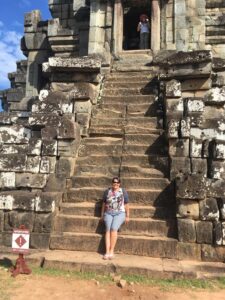
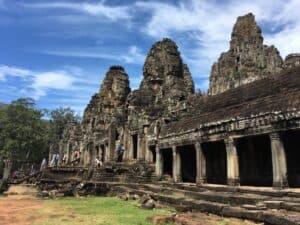
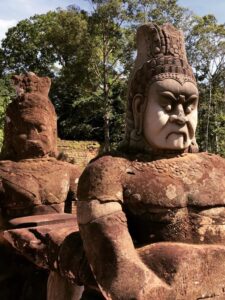
Coined the ‘Kingdom of Wonder’, a rich culture and heritage permeates the very land beneath your feet. The most notable attraction is, of course, Angkor Wat – visited by two million tourists per year and a UNESCO World Heritage Site since 1992, this architectural wonder is the largest religious monument in the world.
Not only is it a veritable symbol of national pride, but other than Afghanistan, it’s the only country in the world to carry the image of a building on its national flag.
Located in Siem Reap, it was built by the Khmer King Suryavarnam II during the 12th century. Initially dedicated to Vishnu, the god who preserves the world from evil entities, it eventually converted into Buddhist temples. The modern name, Angkor Wat, means “Temple City”.
The site itself is fairly substantial and contains a collection of temples, all with unique characteristics: from Bayon (which contains hundreds of faces), Ta Prohm (with trees growing majestically from the old ruins, also having doubled as the backdrop for the Tomb Raider films!), as well as Angkor Thom (containing massive walls punctuated by four gates, each with carved stone faces).
To gain a greater insight into this period, it’s recommended to visit Siem Reap’s Angkor National Museum, and for those who want to delve into its modern history (warts and all), one can take a haunting visit to Choeung Ek, otherwise known as ‘the killing fields’, as well as Phnom Penh’s Tuol Sleng prison, which is equally as harrowing, albeit fascinating for the inquisitive history buff.
It’s not just monuments and museums that constitute Cambodia’s culture – it’s the people! Cambodian people are famous for their hospitality, and it’s not unlikely that you’ll be greeted with welcoming smiles and congeniality as you adjourn through the country. From stall owners to service staff or even passersby, optimism and positivity run rife among the population!
The Urban Scene

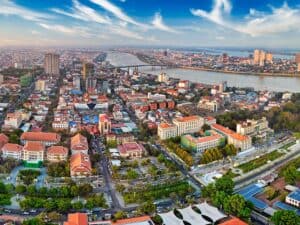

Cambodia isn’t just ancient temples and the pensive reflection of history, the thriving capital city of Phnom Penh (pronounced: “puh-nom pen”) is a revitalised and emerging cultural hub of vibrant nightlife, contemporary arts, bustling markets and excellent cuisine.
With a thriving art scene, galleries can be found around Phnom Penh and the second-largest city, Siem Reap. In locations such as Sa Sa Bassac and Java Café & Gallery in Phnom Penh, you can find many creative works from up-and-coming artists, as well as Theam’s House in Siem Reap, which is well worth a visit for the artistically inclined.
Its markets are famous and always primed for a customary haggle. From the lively Russian Market and Central Market in Phnom Penh to the Angkor Night Market and Old Market of Siem Reap, these multifarious shopping locations flog anything from clothes and souvenirs to household items and car accessories.
To supplement their characteristic optimism, the locals are not one to miss a celebration and the Cambodian calendar contains myriad festivals and public holidays celebrated throughout the year. While the Khmer New Year falls mid-April, Pchum Ben, a religious festival in which Cambodians remember the dead, occurs in early October, with many others on the horizon. To encounter such an event would certainly be an exciting experience!
One element of Cambodian culture cannot be understated, and that is their cuisine – the influence of neighbouring countries such as Thailand and Vietnam are immediately evident, and while there are undisputed crossovers, there contains a lot of originality and uniqueness to the dietary staples you’ll find here.
Pork and chicken are the most popular meats, although seafood – especially crab and squid – is popular in coastal areas. Cambodian dishes to consider include the delicious fish amok (curried fish), bok svay (green mango salad served with dried fish) and samlor karkoo (soup made with vegetables and green fruit – usually jackfruit, banana and papaya).
If you’re feeling adventurous, why not sample some ‘unconventional’ local snacks such as deep-fried tarantula, crickets, frogs or baby alligators?
Natural Beauty
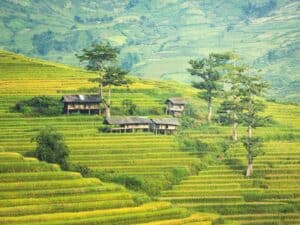
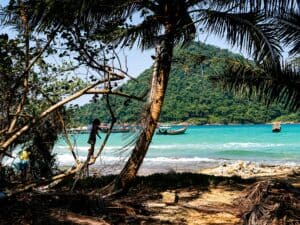
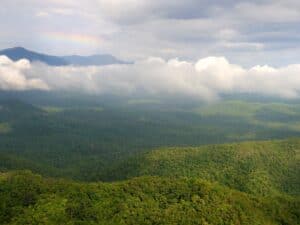
Last but obviously not least, we must give credit to Cambodia’s wonderful and diverse natural beauty. Although it’s famous for its temples, it’s home to some of Asia’s most breathtaking beaches and largely unaffected, yet impressively biodiverse jungles.
Admire the dazzling rice paddies, explore the mysterious allure of remote islands such as Koh Rong and Samloem, as well as the unspoiled Koh Thmei, Koh Ta Kiev and Koh Totang. Bask in the majesty of the Cardamom Mountains – a relatively untouched and species-rich jungle where a whole range of wildlife can be spotted!
The immense Mekong River runs through the country hosting some of the region’s last remaining freshwater dolphins and the northeast boasts mountainous landscapes which provide a home to Cambodia’s highland people and a plethora of natural attractions and wildlife.
If that’s not enough, why not immerse yourself in some of the exceptional national parks, where untainted nature is exhibited liberally alongside its wildlife and ecosystems: be it Ream National Park, with its beautiful rivers, estuaries, beaches and coral reefs. It even contains a small population of villagers. Kirirom National Park, or “happy mountain”, is a mountain plateau composed of natural and semi-natural vegetation, and Bokor National Park, home to jungles, waterfalls, and fresh mountain streams, as well as rare animals such as the Indian elephant and the Asiatic black bear.
All these elements and more prove Cambodia is far from a slouch when it comes to exciting travel destinations – whether you’re interested in the substantial history and culture, energised by the bustling variety of the city or longing to immerse yourself in nature’s splendour, Cambodia has something for everyone! A first time visit to Cambodia could easily be enjoyed leisurely over 10-12 days, or combine a shorter visit of the highlights with a land crossing to Vietnam for a true adventure in the Orient!
