

SHARE:
The Blue City of Morocco
Rich spices perfuming the air, bustling souks abounding with variety and ancient ruins imbued with history, Morocco is one of Africa’s most visited tourist destinations and boasts a distinct character you’re not soon to forget.
With almost 10 million visitors a year, Morocco doesn’t slouch when it comes to tourist appeal. Whether you wish to ride a camel, see the grand desert, explore maze-like medinas or drink tea with Berbers, there are many wonders in store in this country where historical culture fuses with modern sensibilities.
However, there is one attraction that is particularly unique; one unlikely to be witnessed anywhere else: an entire city painted blue! Chefchaouen is Morocco’s unmistakable, sapphire-laden city!
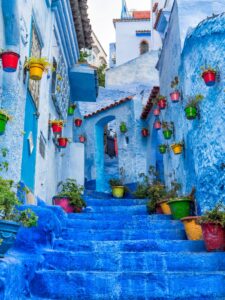
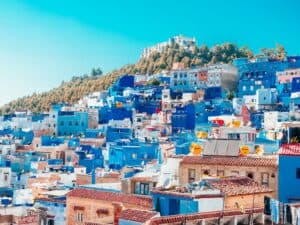
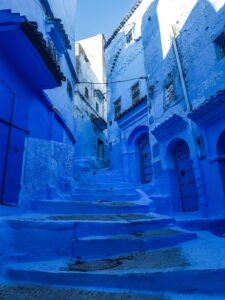
Known as the Blue Pearl of Morocco and burrowed in the glorious scenery of the Rif Mountains, a large portion of the streets and buildings in the city are painted pale blue – sometimes with no contrasting colours in sight – producing a very striking and powerful viewing experience.
Founded in 1471, Chefchaouen is famous for the local handcrafts that are sold at the markets. Tourists also enjoy the local cuisine, which provides traditional Moroccan dishes. Nowadays, the city is inhabited by the Berber people and Muslims, as well as the descendants of the original Jews who originally took residence there.
There are various theories regarding its colour, but no concrete explanation, some believe that the Jewish community used blue to represent God, as there’s a strong tradition of painting things blue for religious reasons. A variation of the story attributes it to Jews fleeing Hitler during his incursion through Europe, whereas others believe it’s simply to repel mosquitos.
Either way, its unique beauty helps retain its appeal. Regardless of its newfound popularity on social media, the city is ostensibly free from tourist crowds and maintains an admirable serenity. Some say it’s Morocco’s ‘best-kept secret’, which may be a result of its remote location.
In stark contrast to this blue-soaked city, Morocco also possesses its direct opposition: the red city… the famous city of Marrakesh is often named as such due to the reddish hue of its buildings.
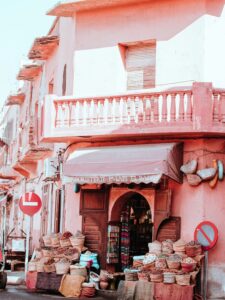
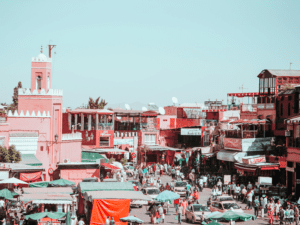
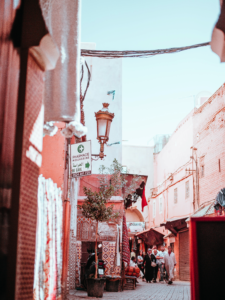
Unlike Chefchaouen, the architecture of Marrakesh was not purposely coloured red, but instead is an effect of the clay and red sandstone used to construct many of its older buildings. In fact, Marrakech has stood for almost a thousand years, and holds such esteem in Morocco that the nation’s own name stems from the name of the city.
Moreover, it’s a vibrant and popular tourist spot – providing an onslaught on your senses – Marrakech has a lively and colourful atmosphere that’s endlessly stimulating, from the countless stalls, the circus-like snake charmers, street food and music jam sessions, it possesses a scintillating uniqueness.
Morocco houses a range of cities and attractions that spark curiosity among travellers – including Fez – lined with an intricate maze of alleyways adorned with colour and personality, Essaouira – a charming and serene port city with excellent galleries and cafes, and not forgetting Rabat – the capital city – divided by the New Town and the Old Town, two contrasting atmospheres providing a unique experience.
Only increasing in popularity and a well-rounded, accessible getaway destination, Morocco is best visited in the autumn (September – November) or early spring (March – April) – the weather is warm, but you will avoid the extreme temperatures of the scorching heat and cold nights.
Odyssey World has a selection of Moroccan itineraries to help you find that exact getaway you’re looking for! If you want to find out more, contact us at enquiries@odyssey-world.co.uk.
