
SHARE:
4 Nights in Morocco – First Impressions!
Souks buzzing with life and colour, awe-inspiring natural scenery and unique cultural architecture infused with history – Morocco is one of the true gems of North Africa and a mainstay of global tourism.
Throughout my experience in this fascinating location, the dichotomy between tradition and modernity was evident: the technology was advanced, the values have progressed, and the commerce is prosperous, yet the country retains an indelible link to its past.
Whether it’s transmitted through the myriad temples, the reoccurring Islamic sigils or the unique curves and contours of its buildings – its French colonial past intertwines with its Arabic roots to showcase a unique and vibrant identity.
After touching down in the country and staying my first night at the cosmopolitan, Art Deco-inspired Barcelo Anfa (which provided enlightening views of the city), I wolfed down the breakfast buffet in preparation for the first port of call: touring the illustrious Mosque Hassan II.

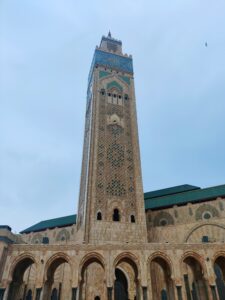
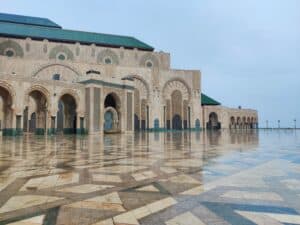
We arrived at the sacralised site via bus to the unfortunate drumbeat of heavy rain. While the mosque is conventionally photographed in sunlight – which certainly aids the appearance of its glistening contours – the rain provided a sombre ambience that granted the temple an understated grandeur.
Hassan II was the largest mosque in Africa until 2019, when it was surpassed by Djamaa el Djazaïr in Algeria. Completed in 2019, it was designed by French architect Michel Pinseau and cost a fairly substantial 585 million euros to build!
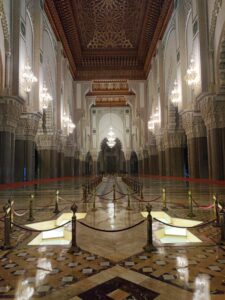
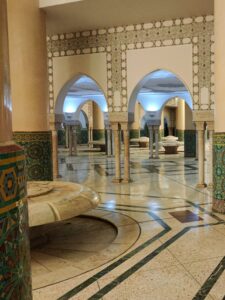
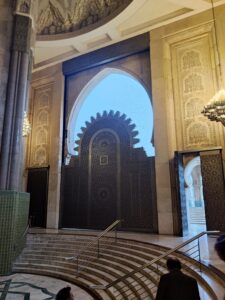
The interior was just as impressive – as our voices echoed through the colossal halls, resonating from the polished marble flooring to the elaborate ceiling, its majesty encompassed an entire sensory experience; with its enormity testing my own piety.
I was shocked by the florid intricacy of its designs – patterns of variegated colours, floral decoration, gilded cedar ceilings, Islamic calligraphy and all forms of adroit Moroccan artisanship were showcased in an ostentatious flourish.
The walls are of hand-crafted marble and the roof is retractable. The minaret (the tall slender tower where the call to prayer is sent out) is 60 stories high and the (only now) second tallest in the world. It’s also topped with a laser that shines towards Mecca.
After exploring the mosque, we engaged in a tour of the city. Casablanca isn’t geared towards tourists to the extent of other locations such as Marrakesh and Chefchaouen, so it was interesting to witness the authentic machinations of life in the city.
Casablanca’s old medina was built in the 19th century. It’s much smaller than those found in other Moroccan cities and primarily caters to the needs of the locals. The atmosphere was at times abrasive, with the piercing sounds of engines, horns and shouts punctuating the collective hum of urban life.


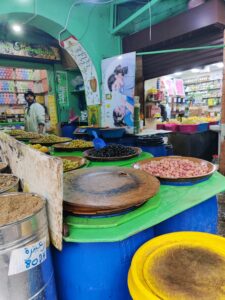
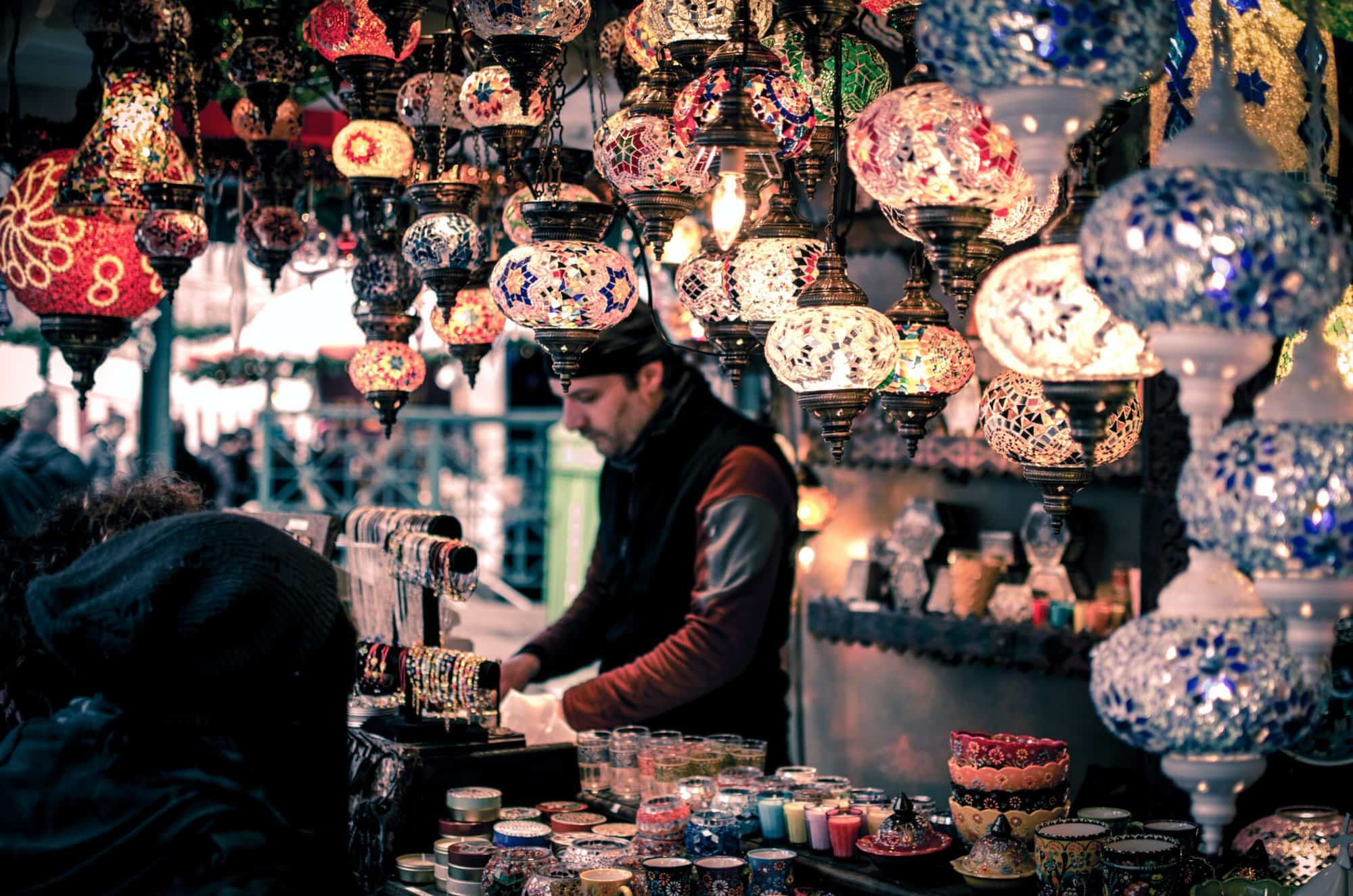
However, I found this contributed to its authentic charm – watching life unfolding organically before my eyes. The souks provided a profusion of stimulation – from the vibrant traditional clothing shops, open-plan kitchens wafting revitalising scents or the endless variety of olives perched precariously atop buckets in a rainbow of colours.
We adjourned to a restaurant specialising in Spanish & Mediterranean cuisine named Beach Mama – an elegant establishment providing seating that overlooks the ocean. Unfortunately, due to the weather, we were not able to capitalise on this signature feature but were nonetheless spoiled with a surfeit of seafood ranging from crab to octopus.
Upon entering the capital city of Rabat, I was immediately acquainted with a new tempo. Its regality was conveyed in its architecture and it possessed a laidback charm that was previously absent. The roster of attractions included Chellah, Kasbah des Oudayas & Tour Hassan – three cultural behemoths that solidified the city’s place as a pinnacle of world heritage.
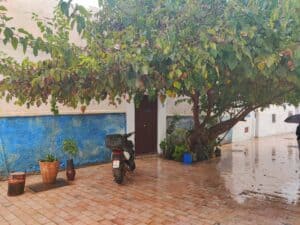
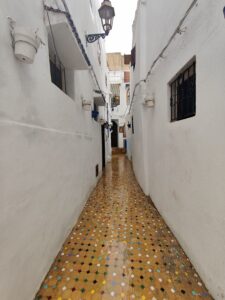

Kasbah des Oudayas is often described as a “city within a city”. Translating to Kasbah of the Udayas – a kasbah describes multiple buildings in a keep (a city behind a defensive wall). Full of steep, narrow streets and surrounded by walls, the buildings are almost all painted white with blue accents, a style not at all uncommon in Morocco.
Interestingly, the city itself began here: dating back to the 12th century, it was built by the Almohad dynasty as a powerful fortification, located specifically to protect the city from pirate ships and invading forces.
However, the kasbah isn’t simply a tourist attraction, many locals continue to live here, making it a fascinating insight into a domestic configuration left unchanged for centuries. Walking around this intriguing location not only felt like a step back into the past, but simultaneously the opposite: a locality still brimming with life!


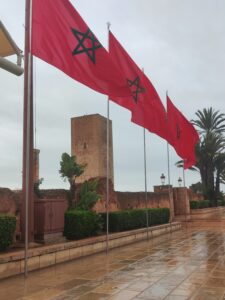
Hassan Tower, aka Tour Hassan, is equally replete with historic value: originally intended to house the largest minaret in the world, construction of the mosque was discontinued when Abu Yusuf Yaqub al-Mansur, the third Caliph of the Almohad Caliphate, died in 1199. If construction of the mosque had come to fruition, it would have been the largest in the western Muslim world.
My trip just so happened to coincide with the World Cup and, as luck would have it, the Moroccan team performed surprisingly well. Upon entering my room at the luxurious View hotel, I was bombarded with a cacophony of horns and shouts from the streets below. It didn’t take me long to realise that Morocco had just won a game (2 – 1 over Canada).
As we ventured out for dinner at the magical Dinarjat, a charming traditional restaurant with a romantic flair, the ceaseless celebrations and sluggish traffic were impossible to begrudge – men, women and children of all ages were painted with effervescent smiles and a radiance that proved just how powerfully sports can unite a country!
The next morning we adjourned to the train station and boarded a high-speed train to Tangier. Often known as Europe’s gateway into Africa, Tangier is a classic port town with an international, cross-cultural influence of North African, Spanish, Portuguese and French. It also has a veritable history of accommodating American diplomats, spies, bohemians, writers and businessmen, giving it a unique and mysterious appeal.
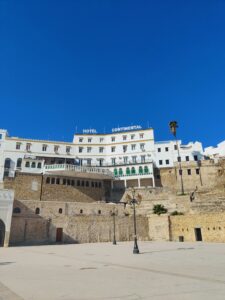
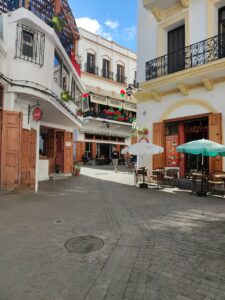
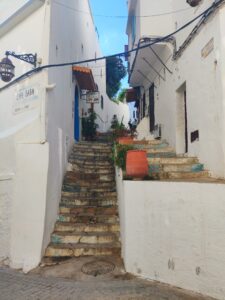
Upon entry, I was greeted with an unceasing rhythm of palm trees as the blue waves reflected the sun, illuminating the white architecture that permeates the city. Tangier’s medina was animated and energetic, punctuated with nonchalant cafes and carefree shoppers.
The bleached buildings were bifurcated by wooden doors and frames with yellow and bronze accents that gave the area a distinguished gold tinge. The local businesses hung cloth, signs and hanging baskets of flowers that ranged in colour and contrasted the washed-out hues, creating a rich visual effect.
After roaming the streets and imbibing the atmosphere, we stopped for lunch at Palais Zahia restaurant, a traditional affair serving various halal concoctions. The eatery is eclipsed by a large, looming chandelier hanging from the ceiling like a celestial entity, while a musician plays acoustic melodies to augment the ambience.
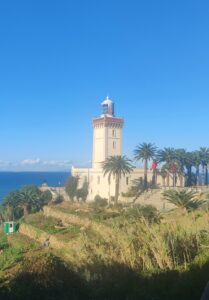
Cape Spartel was the next port of call: the second most northernmost point of Africa, its natural beauty overlooks the Strait of Gibraltar and provides enlightening views of the vast sea where the Mediterranean Sea meets the Atlantic Ocean.
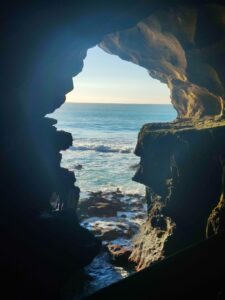
Below the cape are the Caves of Hercules. While our stay was short-lived, we were able to witness the famed ‘Map of Africa’ – referring to the cave opening toward the sea that resembles its shape. It was believed that the opening was created by the Phoenicians, an ancient civilisation, given that the cave is part natural and part man-made.
The caves are also known for their wildlife, most notably the endemic birds known as Cretzschmar’s Bunting, as well as being home to over a thousand species of plants and various types of scorpions and bats, which, *shudders*, make up great numbers.
That evening, dinner was served at our hotel: the eminently luxurious Fairmont, a 5-star hotel that had only opened a month prior and was still glistening with freshness. Originally built in the 1920’s as a residence to the King’s advisor, it’s now been transformed into a hotel boasting incredible views!
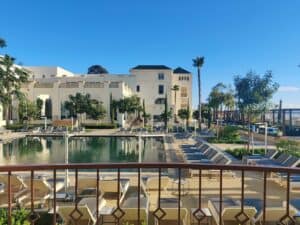
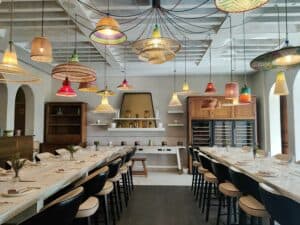
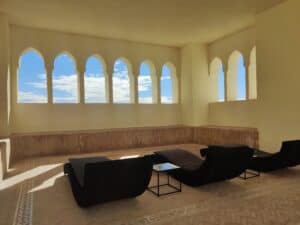
The palatial halls are filled with coloured patterns and paintings conveying Morocco’s artistic sensibilities, the (seven) restaurants and bars are equipped with bespoke finery and as you approach the sun-drenched balcony you’re confronted by the glimmering pool and a scenic hillside vista of Tangier.
The meal consisted of an endless entrée of locally-sourced gourmet cuisine, starting with a varied selection of seafood ranging from fish, crab, lobster and octopus to red meats like lamb and chicken glazed elegantly with savoury sauces.
After waking up in the morning, strolling to my balcony and nabbing one last look at the scenic panorama as the sunrise painted the city in full colour, it was time to make the trip to Tetouan.
Often overlooked among tourists, Tetouan is a city where people primarily live and work. There are few souvenir shops or attractions catered to visitors, and for this reason, it provides an accurate glimpse into the everyday life found in Morocco.
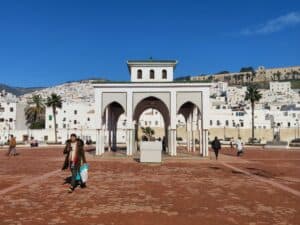
Walking into the town centre, my attention is caught by the grandiose Iglesia de Nuestra Señora de la Victoria – a vibrant yellow church which marks the passage of the Spaniards through the territory, as well as housing the Royal Palace, which is permanently guarded.
The backdrop to the city is populated by characteristically white rectangular houses ascending up the hills like a staircase, while the shopping centre is lined with cobblestone streets and small balconies.
The atmosphere shifts upon entry into the old medina. As well as being a UNESCO World Heritage site, the area also contains a Jewish quarter and a traditional home turned museum, which holds an exhibition known as “visions of Tetouan”.
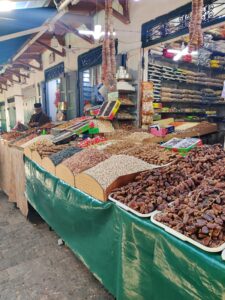
The streets are particularly narrow, with distinctive green doors and signs, giving the area a very individual look. Bustling with customers and commerce, the shops are narrow but recurrent, with goldsmiths, clothes, spices and more, all wafting a new scent or engendering a new style.
Progressing further, the food market is increasingly riotous – motorbikes zoom down narrow lanes, their gruff engines echoing around the tight walls, while a continuum of voices operate ceaselessly to sell you produce – be it the colourful variation of fruits and vegetables or slabs of fresh fish glaring at you from the other side.
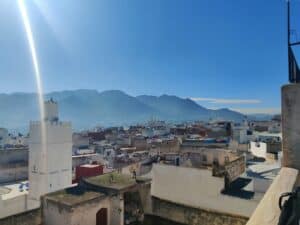
Eventually, we ascended a staircase whose chunky stone steps required laboriously long strides, but the effort was duly rewarded by a panoramic rooftop view of the city with a scenic mountain backdrop hazed in light fog. Rustic and somewhat depreciated, the rooves provided a new perspective…
Washing lines draped from side to side and rusty satellite dishes craned upward in endless numbers as locals sat atop their rooftops to chat and work and avoid the traffic beneath, as if a second level to the city. Perched virtually equidistant from each other are loudspeakers, typically situated on minarets, which sound five times a day for the call to prayer.
Lunch was a seafood selection at local restaurant La Esquina Del Pescado, a nearby establishment decorated with an aquamarine aesthetic and serving a wholesome selection of fried fish and seafood, and for dessert: a tangy lemon tart. The walls are decorated with various paintings of local landmarks, notably Chefchaouen, which happened to be our next port of call…
Not only is Morocco famous for its “white city” of Casablanca and “red city” of Marrakesh, the theme of colour-specific cities continues with the “blue city” of Chefchauoen. But unlike Casablanca’s architectural proclivity towards white shades and Marrakesh’s red sandstone hues, Chefchauoen was intentionally engulfed in deep, unmistakable blues.
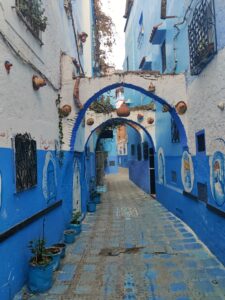
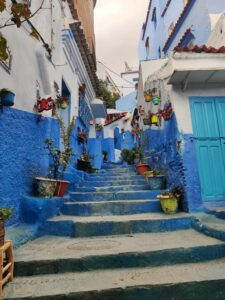
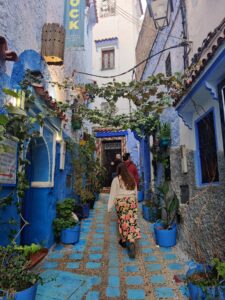
There are various theories attempting to explain its colour but no concrete explanation – reports of the blue city have existed since the 15th century, some alleging it as a Jewish tradition representing God, others suggest it may help to cool the city during hotter spells, whereas some believe it’s simply to repel mosquitos.
As we travelled through the Rif Mountains, we estimated our proximity based on the volume of blue we could see. The city doesn’t relegate its colour to within its boundaries, blue-ness simply spills out and imbues the local area too!
While the location has embraced its popularity as a tourist destination with a range of commercialised shops and souvenirs, its authentic charm is retained as many locals continue to live, work and shop in the area.
If you’re interested in picking up some local handicrafts, there will be no scarcity of choice as the local markets are abounding with expertly-crafted items such as wool, camel blankets, pottery, jewellery, patterned clothing and more, all made in traditional Moroccan ways.
While the ubiquity of its trademark colour is impressive, at no point did it feel overbearing or oppressive. You won’t need to rest your eyes from overstimulation as the gradients are light, refreshing and accented with flowers, patterned cloth and complementary colours.
As we departed the confines of the city, the mountainous backdrop was accompanied by a deep red sunset that contrasted Chefchauoen’s signature colours and illuminated the city one last time before nightfall.
Dinner was served at Lina Ryad & Spa, a Chefchauoen-based hotel whose colour scheme aligns with the city’s famous style – blue walls and white furniture merge into white walls and blue furniture, honouring the eminent design language of the area. The food was a buffet of soups and seasoned meats, followed by a dessert of crème brûlée and glazed fruits.
That night, our accommodation of choice was the rural Auberge Dardara – a rustic and traditional Moroccan hotel in the heart of the Rif Mountains. The stone walls and handcrafted doors gave the rooms a quaint, cabin-like aesthetic and the patterned floors and wicker chairs encapsulate the signature Moroccan style.
Unfortunately, not only was our entire stay spent in darkness (due to a late arrival and early exit), but in the winter months Morocco can, contrary to expectations, become quite cold, meaning the exquisite view of the mountains was absent and the stone architecture designed to modulate the sweltering summer heat was of little help. If only it had been mid-July!
The trip thus concluded and before long I was reacquainted with some traditionally dreary English weather, yet possessing a smorgasbord of unique experiences, memories and luckily, photos to reflect on the previously pampered lifestyle that I was almost getting too used to!
Morocco put up an impressive display as the country gears itself for greater tourist-centrism – while some report negative experiences due to scammers or petty thieves, I personally didn’t experience anything of the kind: the hospitality we were shown was second to none and the servers and staff of everywhere visited went above and beyond in the interests of assistance.
Odyssey World offer a range of customisable Moroccan itineraries. Check out our destination page or contact us at enquiries@odyssey-world.co.uk!
