
SHARE:
Why they paint eyes on cows’ butts in Botswana
While Costa Rica was busy growing forests out of orange peel, Sri Lanka developing paper out of elephant poo and the camels of Oman were swimming gracefully across the high seas, scientists in Botswana swore to stake their claim in the psychedelic tapestry of kooky blog topics.
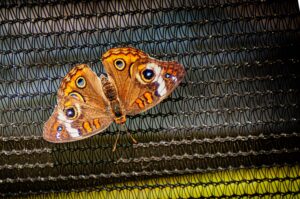
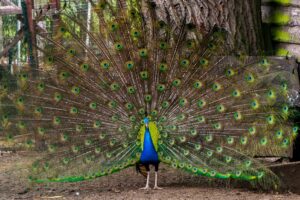
In nature, it’s not uncommon for certain animals to develop spots resembling eyes somewhere on their body. It’s seen in butterflies, amphibians, birds and other species. The purpose of these markings are of evolutionary origin – they convince potential predators that they can be seen, reducing the likelihood of attack.

However, these markings have never been witnessed in mammals, until researchers at UNSW Australia decided to usurp the evolutionary process and take matters into their own hands!
Predation by lions is an increasing problem among the cattle of Botswana. While farmers once let their cows roam and graze during the day, the ubiquity of lion strikes in recent times has encouraged more concentrated (and fairly innovative) methods of protection.
Typically, when a farmer loses a cow, the village will volunteer to help find and kill the lion responsible in an attempt to prevent a reoccurrence. The obvious problem with this strategy is the eradication of an already vulnerable species.
Lion numbers have been falling dramatically in recent years, not least helped by these (admittedly) protective practices. Scientists estimate that there are only around 20,000 remaining of what once were the kings of the jungle – a measly 10% of their population just a century ago.
A humane solution arrived in the form of painting eyes on the backsides of cows! As they’re primarily ambush hunters, lions will abandon the hunt if they believe their prey has spotted them, so from an appropriate distance, glaring eye contact will signal visibility.
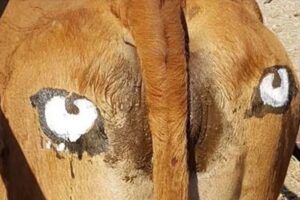
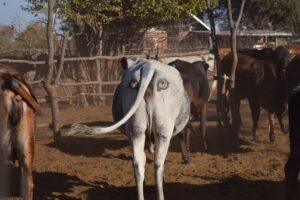

To determine the effectiveness of this practice, scientists painted one-third of each herd with an eye design, one-third with a cross, and the rest remained unmarked.
Of the 683 cows with painted eyes, zero were killed by predators during the four-year study. Conversely, 15 of the 835 unpainted cows and 4 of the cows with cross marks met the jaws of a lion. The conditions remained the same, and while the cow populations differed slightly, the effect of the eyes is undeniable.
While this isn’t to suggest the method is impenetrable; an all-encompassing panacea that obliterates predation, it is a productive step in the right direction. Dr. Neil Jordan, head of the operation, concludes that rather than solving the issue outright, it’s “one of a number of tools that can prevent carnivore-livestock conflict”, adding that “no single tool is likely to be a silver bullet”.
These kinds of conservatory practices are not surprising given Botswana’s general emphasis towards protection of the environment – with over a third of the country’s landmass falling under the aegis of preservation. Serving as a sanctuary for the world’s largest concentration of elephants, as well as encompassing a range of endangered mammals such as the black rhino, African wild dog, cheetah and more.
In addition to this, Botswana triumphantly banned commercial hunting in 2014, developing former hunting grounds into photographic vistas of wildlife and exceptional natural beauty, as well as converting their tourism model into one which mitigates impact on the environment, meaning that observers can now avoid congested and contrived game drives.
These pioneering features of sustainability befit a shining recommendation for Botswana as a travel experience. Well-known for its incredible safaris, breathtaking wildlife and exciting adventures, its grandeur is etched into the fond memories of many of our customers!
It also bears the accolade of being a destination appropriate all year round! While many opt for travel during the May to October dry season, the green season is equally beautiful, and the wetter months are the ideal time to watch the migration of zebras.
