
SHARE:
The Many Faces of Seoul
Boldly standing outside of the pack as a city intent on defying convention at every turn, Seoul is one of the most dynamic cities in the world – vibrant, energised, and somewhat eccentric – South Korea’s capital is a historically replete metropolis where innovation and cultural heritage merge in exceptional fashion.
 Its roots date back over 2,000 years – it gained prominence during the Joseon dynasty, becoming the official capital in 1394 under the name Hanseong. In the early 20th century, it fell under Japanese rule, and in more recent years, the Korean War caused internal shockwaves.
Despite its complex history, Seoul has rapidly rebuilt into a modern, technologically advanced metropolis, all while retaining characteristic elements of its past – many of its enduring cultural and architectural legacies, including the iconic palaces, have emanated from these aforementioned periods, giving it a unique aesthetic shared with many East Asian countries: the jarring yet beautiful confluence of tradition and modernity.
Seoul is now a bustling megacity – meaning a metropolitan area with a population above 10 million, an accolade it shares with Tokyo. It has given rise to a plethora of pop-culture sensations, from the ever-present K-pop, hit series’ such as Squid Game, the explosive (albeit dated) Gangnam Style, quirky café culture, Esports and more.
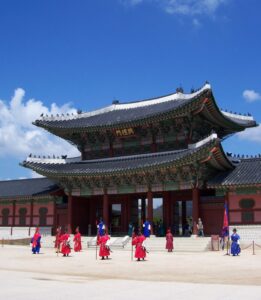
 Despite its undeniable dynamism in the modern era, Seoul has a story to tell: it boasts five grand palaces – the oldest and largest of which, Gyeongbokgung Palace, was built in 1395 at the cusp of the Joseon Dynasty; a rule that eventually constituted one of the longest in East Asian history – dissolving around 1897!
These extant palaces remain an alluring sight to visitors and tourists – surrounded by tranquil gardens, they exemplify the architecture of a bygone era – sweeping curved roofs, intricate wooden décor, and vast pavilions, this design language embodies the philosophy of Feng Shui, the practice of arranging objects and structures harmoniously, a concept which persists even today.
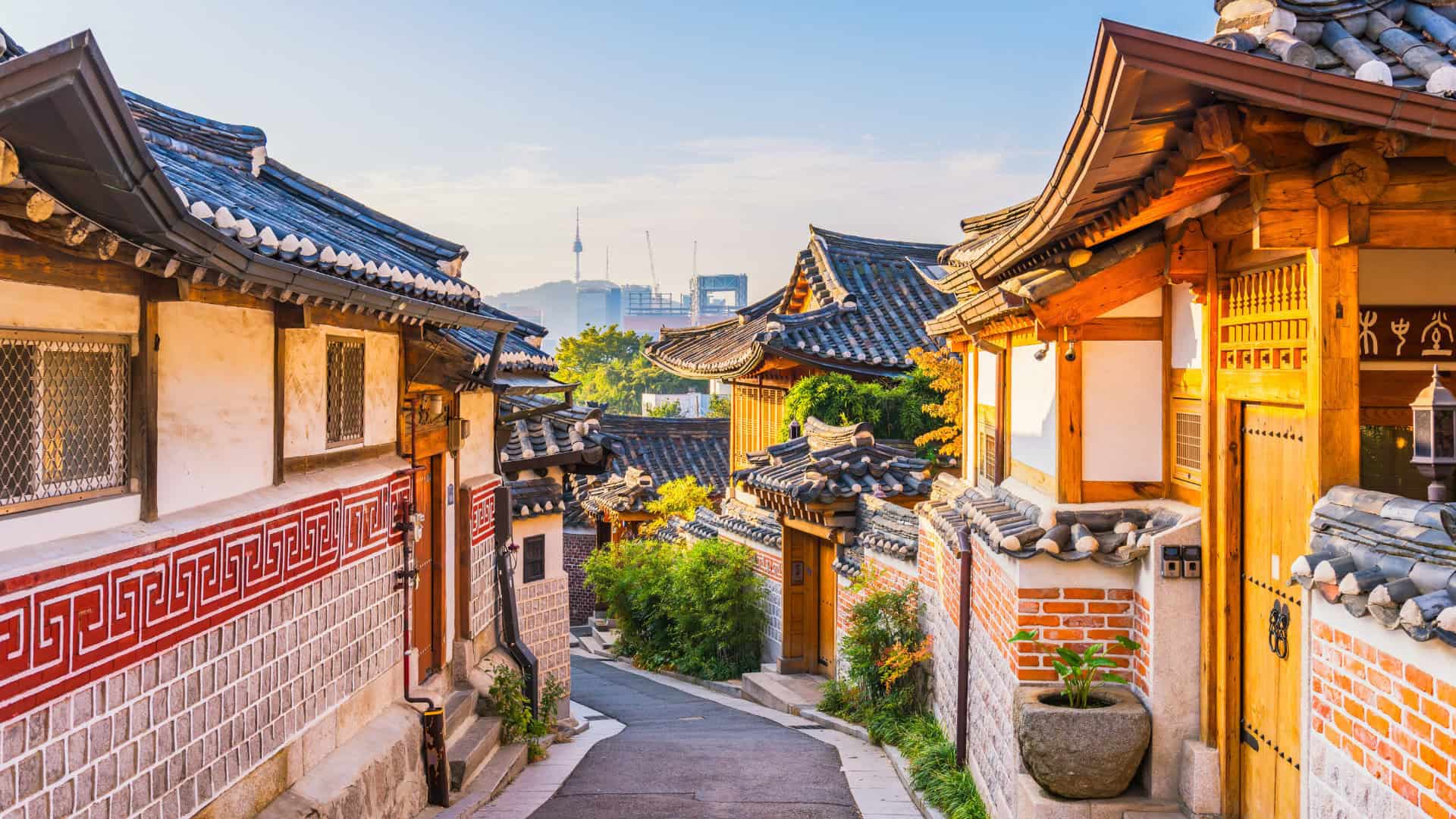
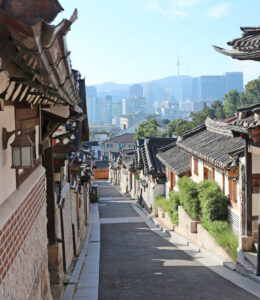
Just nearby, the vestige of Bukchon Hanok Village steadfastly resists the encroachment of modernity – there, you can explore beautifully preserved hanoks (traditional Korean houses) which sustain the posterity of centuries-old architecture. This incredible neighbourhood was historically home to high-ranking government officials and noble families. Many of the hanoks were constructed during the 15th century, although some bear more recent roots.
 In recent years, Seoul has become renowned for its technological innovation and its unsleeping metropolis; however, the city is elegantly cradled by 44 breathtaking mountains and a surfeit of refreshing greenery. Despite its advancements, nature remains (thankfully) inescapable. For a natural escape within the city, the Seoul Fortress Walls are historic fortifications which snake across the city’s peaks, offering hikers incredible panoramic views of both the effervescent city and its surrounding ecological beauty.
To fulfil the thrill of even greater elevation, N Seoul Tower, its monolithic eye in the sky, provides one of the greatest, if not the greatest, view of the city. Perched atop Namsan Mountain, the sight displays a dizzying array of metropolitan bustle, punctuated by green spaces and the occasional hanok.
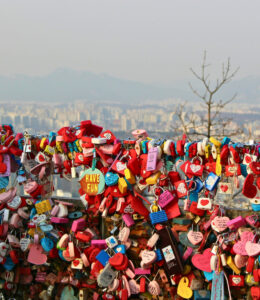
The tower is also home to one of the city’s quirkiest traditions: love locks. Couples congregate here to attach padlocks to the fences, in the hope of cultivating a love as enduring as the city itself. According to legend, this tradition originated in Serbia during World War I, where a tale of unrequited love inspired young women to adopt the practice. The tradition continues to spread worldwide, with South Korea’s capital lending a hand in its dispersal.
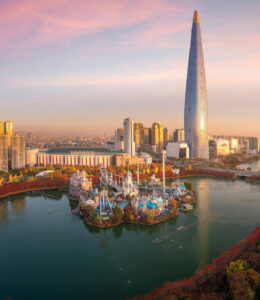 Descending from Namsan, the rhythm of the city is embodied by the vibrant shopping district of Myeongdong – packed with cosmetic shops, high-fashion boutiques, and a copious array of themed restaurants and cafes, this is the consumerist heart of contemporary Seoul. Talking of rhythm, karaoke bars (or noraebang) are an integral part of the local culture – to the point in which you’ll find a karaoke bar for every 333 people in the city! These ubiquitous and unabashedly blaring establishments see countless ‘Seoulites’ release the day’s stresses by belting out the latest pop sensations.
Juxtaposed most strikingly with the metropolitan uniformity of the city is Lotte World, one of the world’s largest indoor theme parks, situated in the centre of the city and encircled by water and greenery. Inside, you’ll find thrilling roller coasters, whimsical parades, and even an ice-skating rink, infused with an audacity and ostentatiousness that can aptly characterise Seoul’s personality.
When the din of city-slicking becomes a little abrasive, you may want to retreat into Seoul’s answer to Central Park – with extensive walking trails, deer-feeding stations, an Art Park and much more, Seoul Forest offers a sprawling green oasis burrowed in the corner of the city. The area also stands proudly as a symbol of Seoul’s dedication to sustainability: with community gardens, a butterfly conservatory, and various green initiatives, the area is emblematic of the country’s path towards eco-consciousness.
Seoul’s relatively recent reinvention as a technological and cultural pioneer, coupled with its reverent history and proliferation of tourist attractions has helped turn the tide on its perception. Not only has it gained a reputation within pop culture as a neon-lit, quirky, and vibrant cultural powerhouse, but the presence and cultivation of its green spaces and historical architecture belie a more sensitive, culturally attuned attitude that may have been imperceptible a few decades prior.
South Korea’s popularity continues to grow and its eccentricities make for a highly compelling travel experience. If you’re interested in a whirlwind journey exploring South Korea’s highlights, check out our ‘This is South Korea’ itinerary! If you’re interested in a customised experience, contact us directly to personalise your own adventure – enquiries@odyssey-world.co.uk / +44 117 313 7070!
