
SHARE:
The most bizarre (and beautiful) birds in the world!
Few activities can connect us to the natural world quite like birdwatching. When you take the time to truly observe the environment around you, oftentimes you notice how intricate, beautiful and fascinating it is; qualities that are easy to overlook when you don’t pay attention.
According to the latest data, there are more than 11,000 bird species in the world, spanning all shapes, sizes, and colours. While these animals are some of the most beautiful, they’re also some of the most vulnerable: their presence (or lack thereof) and behaviour can serve as an indication of human encroachment in the area, and great efforts are being undertaken to ensure the survival of many species deemed at risk.
While it’s good to stay optimistic, some of these incredible species may not be around forever, so now is the perfect time to witness them in the flesh (feathers?). We’ve all seen the most common species of birds, but nature’s creativity may yet surprise you. From the comical to the elegant, this blog will give you a little insight into some of the most bizarre (and beautiful) birds on the planet – some of which are exceedingly rare!

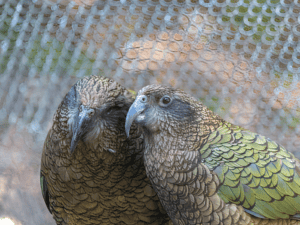
Kakapo (New Zealand)
Found among the stunning landscapes of New Zealand, the Kakapo is technically a member of the parrot family, albeit with a bizarre twist: they’re entirely flightless. These quirky, brown-eyed weirdos overcompensate for their ground-dwelling nature by having exceptionally strong legs that they use to climb and navigate the varied terrain.
Another intriguing aspect of this species is their nocturnal nature: sometimes known as the owl parrot or the night parrot, the Kakapo is primarily active during the night – its large eyes are well-suited to low-light conditions, and their introverted disposition means spotting one is doubly difficult!
Unfortunately, this kooky species faces an alarming threat to its existence – being classified as critically endangered, with only a small and vulnerable population remaining. Thankfully, conservation efforts are underway to rejuvenate numbers in the area.
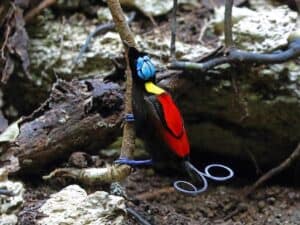
Wilson’s Bird-of-Paradise (Indonesia)
The dazzling colours and designs displayed on birds of paradise are unlike anything else, and this small yet flamboyant bird serves as no exception. One of the most visually striking in the world, Wilson’s bird-of-paradise exhibits a bright emerald green body with a brilliant turquoise crown (so vivid that it’s clearly visible at night), while its back is adorned with intricate patterns of yellow and scarlet, and a remarkable curled tail.
Despite its ostentatious appearance, it remains particularly elusive and difficult to spot, as well as only existing in a very specific area. It’s known for its elaborate courtship displays, which involve complex dances and vocalisations.
Unfortunately, like many rare and esoteric bird species, its habitat is being destroyed and endangering its existence – thankfully, conservation efforts are underway to preserve this magnificent bird!
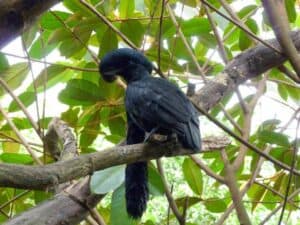
Long-wattled Umbrellabird (Colombia & Ecuador)
Now they’re just getting silly! This gloriously eccentric species is sure to turn heads, not only does it rock an Elvis-inspired pompadour on its head, but what truly sets this bird apart is the long, pendulous wattles that hang from its throat – these can to up to a foot or more in length, making it one of the most flamboyant birds in the world.
Primarily existing within rainforests, it stealthily forages for fruits and insects amidst the foliage. After swallowing fruits, it regurgitates the seeds, contributing to the dispersion of plant species within its habitat.
Despite its bizarre appearance, this species isn’t very loud or vocal (hardly needs to overcompensate), and often communicates with low-pitched, grumbling calls that may be heard echoing through the misty rainforests it calls home.
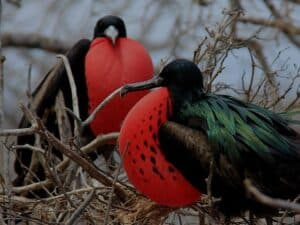
Magnificent Frigatebird (Americas)
The “magnificent” in this species name is well-deserved, because not only is its appearance strikingly unique, but its elegance and power are unmatched. The males are particularly eye-catching during mating season when they inflate their red throat pouches to attract females – sexy!
But aside from their unconventional appearance, frigatebirds are renowned for their remarkable flying abilities. They are known to spend extended periods of time in the air – with a wingspan that can reach up to 8 feet, they can soar through the skies gracefully.
These seabirds primarily feed on fish and squid, which they snatch from the ocean’s surface. Their agile and acrobatic flight style allows them to compete for food successfully, even in environments teeming with other avian competitors.
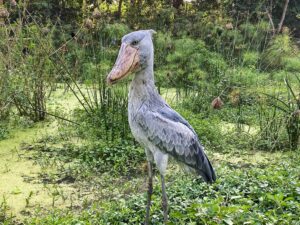
Shoebill (Africa)
Standing over 5 feet tall with a wingspan of around 8 feet, the Shoebill is not a bird you want to provoke, not least of which due to its massive, shoe-shaped bill – the largest among any living bird species!
Sporting bluish-grey plumage, their colour helps them blend in with the swampy environment. Being stealthy predators, they often stand motionless for hours in shallow waters, patiently waiting for unsuspecting prey. When the moment is right, they strike with lightning speed, using their massive bills as a formidable weapon to capture their target.
Like many of the wonderful birds on this list, habitat loss and wetland degradation pose a threat to their population. Luckily, several organisations and initiatives are dedicated to the protection of these magnificent birds.
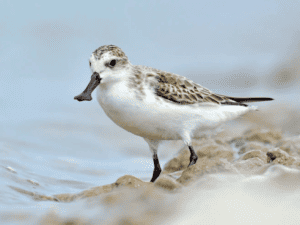
Spoon-billed Sandpiper (South-east Asia)
As a stark contrast to the Shoebill, this unique species of bird is diminutive: measuring about six inches in length. The Spoon-billed Sandpiper is a small wader (or ‘shorebird’), its name is derived from its most striking feature – a unique, spatula-shaped bill that comes in handy for a multitude of uses!
Perfectly adapted to its environment, it uses its characteristic bill to feed its young, as well as to dig into mud and sand, searching for small invertebrates like tiny crustaceans, molluscs, and insects. This unique adaptation allows it to exploit food sources that many other shorebirds cannot access…
Breeding in the remote and harsh tundra regions of Russia’s Chukotka Peninsula, they build nests amongst the Arctic wilderness, before embarking on an incredible journey that can cover thousands of miles, flying southwards to warmer climates for the winter.
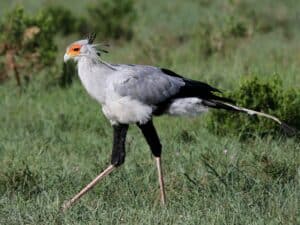
Secretarybird (Sub-Saharan Africa)
A distinctive appearance, characterised by long legs, a crested head, and quill-like feathers protruding from its back, the Secretarybird is an icon of the African wilderness. Its physical attributes make it perfectly adapted to its environment: its stilt-like legs allow it to stride elegantly through the tall grass, while its sharp beak and strong talons serve as lethal weapons in the pursuit of prey.
Often seen in pairs or small family groups, these birds form monogamous bonds that endure over a lifetime. Their nests – constructed meticulously in the safety of acacia trees – convey their robust family units.
The Secretarybird features widely in the realm of African folklore – in various cultures, it is revered as a symbol of resilience and tenacity. Its strong presence and commanding aura have inspired many tales of bravery and determination.
While some of these birds are particularly elusive, with a dash of tenacity they can still be sought out by the concerted adventurer. Eager to read more? Check out our sequel: even more of the most beautiful (and bizarre) birds in the world! If you’re interested in a real encounter, visit our respective destination pages to browse itineraries or contact us directly to personalise your own trip! Either email us at enquiries@odyssey-world.co.uk or call us directly (+44 117 313 7070)!
+birds+in+the+world!)