

SHARE:
How to see Snow Monkeys bathing in Japan
Don’t miss out on seeing the Japanese Snow Monkeys bathing in natural hot springs in northern Japan. Here’s my top tips to get the most from your visit to Jigokudani Monkey Park …
1. It only snows in winter
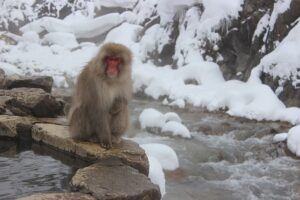 Although the park is open all year round, the best time to see the bathing monkeys is when the area is covered in snow. The Narnia-like setting with the monkeys warming up in the onsens (hot springs) is particularly special. There is usually snow in the region from December to March, and the best timing for a visit is January and February. The monkeys can survive winter temperatures of below -15 °C, so make sure you wrap up warm, as unfortunately, you don’t get to join them in the hot springs!
The Japanese macaques go to the valley during the winter, foraging elsewhere in the national park during the warmer months. In summer, it is often too hot to be bathing in the onsens, so we highly recommend you visit during the winter months.
2. You’ll need snowshoes
The Monkey Park is located in the Yokoyu River valley, at 850 meters. The area is called Jigokudani, meaning “Hell’s Valley,” due to the steep cliffs and hot water steaming out from the earth’s surface. It’s a fairly harsh environment in winter with heavy snowfall, but a paradise for the couple of hundred monkeys that live there.
To reach the monkeys there’s a 30-hike in the snow on narrow footpaths through the forest. It is advisable to take proper hiking gear and snowshoes, suitable for snowy conditions.
3. Escape the crowds
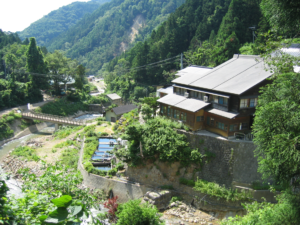 Jigokudani Yaenkoen Park opened in 1964 in order to protect the monkeys from harm from the local farmers, where the monkeys had been getting close and stealing food. Since then many thousands of tourists have visited the park to see the monkeys for themselves.
My recommendation is to have an overnight stay in the area, as the snow monkeys don’t visit every day, and that gives you two days just in case. I also advise you to go early in the morning to avoid disappointment. The Park opens at 09.00am in winter, and from the entrance there’s a short 30-minute hike to the onsens. If you arrive early you might be lucky enough to avoid the crowds and get the monkeys all to yourselves.
The park closes at 4pm in winter, so make the most of your day by arriving before midday, as in the afternoon the monkeys have usually had their bath and want to retire to have some privacy!
4. Take a sneaky peek at the webcam
There is no guarantee of seeing the monkeys in the onsens at any time, but to help your chances you can check out this webcam daily to see if there are monkeys around…and avoid a snow-covered hike through the mountains for nothing!
5. Don’t forget your camera!
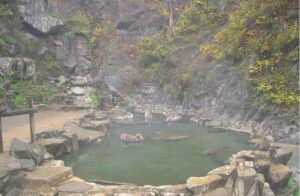
Watching the monkeys play and swim in the onsens is a lot of fun. Their small red faces look almost human-like, wrapped up warm in fluffy grey fur, making them endearing and entertaining. But do not stare into the monkey’s eyes as this indicates hostility.
In the wild they spend most of their time in forests and feed on seeds and berries and bark, so it is rare to be able to observe them high up in their natural habitat, so photos to take home are a must!
But be aware, snow + hot water = steam! Making it hard to get that award-winning shot. And selfie-sticks are not advised – you mustn’t get too close as they are still wild animals!
