

SHARE:
History of Ancient Empires: The Incas
Here at Odyssey World, many of our best-selling and longest-running itineraries are packed with cultural significance. There’s no better feeling than encountering ancient ruins and being able to touch, smell and see them whilst acknowledging that you’re standing in the epicentre of a once-magnificent empire.
The more we learn about our history, the richer our appreciation becomes, and the more it fuels our curiosity. Many of our cultural excursions tell a compelling story, one interwoven with myths and legends as well as an inexplicable magic that still exists to this day. So, in our latest series of blogs, we will explore and expatiate upon what once was; delving into the enthralling history of the giants upon whose shoulders we stand.
The Inca Empire, or the “Realm of the Four Parts” in Quechua (the main language), was the largest empire in pre-Columbian America. Rising from the Peruvian highlands between c. 1400 and 1533 CE and eventually extending across western South America from Quito in the north to Santiago in the south, it was the largest empire in the world at the time.
Unperturbed by the harsh Andean environment, the Incas conquered societies and utilised extreme and diverse landscapes such as plains, mountains, deserts and tropical jungle. The influence of the Empire left an indelible mark throughout history – the enduring legacy of their engineering achievements, governance and spirituality served as a template for cultures and empires to come.
History & Origin
 The Inca Empire marked the culmination of thousands of years of Andean civilizations – preceding the Inca Empire were two formidable Andean empires: the Tiwanaku (circa 300–1100 AD), centred around Lake Titicaca, and the Wari or Huari (circa 600–1100 AD), established near Ayacucho. The Wari thrived in the Cuzco region for approximately 400 years, thus, many of the characteristics of the Inca Empire were derived from earlier Andean cultures.
The original Andean Civilisations are one of five civilisations deemed to be “pristine”, meaning that they developed independently of external influences and are not derivative of other civilisations.
According to legend, Manco Capac and Mama Ocllo, sent by the sun god Inti, emerged from the depths of Lake Titicaca and founded the city of Cusco. The Incas were governed by a successive number of rulers, but it wasn’t until the introduction of Pachacuti Inca Yupanqui that the empire truly started to take shape.
Pachacuti, a visionary ruler, radically expanded the territory significantly through military conquests and strategic alliances. He implemented administrative reforms, laying the groundwork for the empire’s expansion and consolidation. He is thought to have built Machu Picchu, either as a family home or summer retreat, although it may have been an agricultural station.
While the Empire is often spoken of as a cohesive unit, in actuality it contained an amalgamation of languages and cultures. The subjects of the empire were not all strictly loyal, nor were all the local cultures fully integrated. This is likely the result of such rapid and unchecked expansion.
Economy & Governance
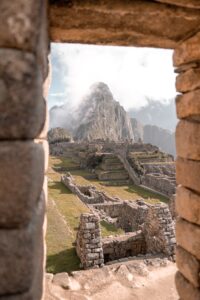 The Inca Empire operated predominantly without the use of currency. Instead, the exchange of goods and services relied on reciprocal arrangements among individuals, groups and rulers.
Despite the lack of a monetary system, the central government still required taxes: these usually consisted of foodstuffs, precious metals, textiles, exotic feathers and dyes, but also in labourers who could be shifted about the empire to be used where they were most needed.
In return, the state provided benefits such as housing and security, food redistribution in times of environmental disaster, better storage facilities for foodstuffs, work via state-sponsored projects, state-sponsored religious feasts, roads, irrigation systems, terrace farms, military assistance, and even luxury goods…
There was no written language, but a form of the Quechua language became the primary dialect, and knotted cords known as quipu were used to keep track of historical and accounting records.
While the state had no codified laws – societies were policed under the edict of customs, expectations and traditions. The state also employed legal force, through ‘inspectors’ and ‘tokoyrikoq’ (translating to “he who sees all”). There were three main moral precepts that governed the behaviour of the populace: Ama sua (“do not steal”), Ama llulla (“do not lie”), and Ama quella (“do not be lazy”).
Societies were constructed on the foundation of traditional hierarchies: The Sapa Inca (“the only emperor”) was an absolute ruler, and he lived a life of great opulence – drinking from gold cups, wearing silver shoes and living in a palace furnished with finery.
Below the emperor, in regards to hierarchy, were kindred groups of nobles called panaqa. The closer the relation to the king, the greater their status. At the bottom were locally recruited administrators who oversaw settlements and the smaller Andean populations called the ayllu, which typically consisted of a collection of working households.
Technology & Architecture
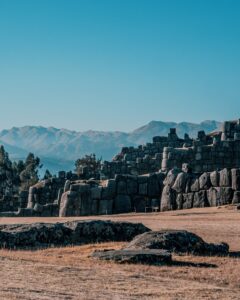 One of the most commonly remembered aspects of the Incas was their exceptional architectural advancements. At the heart of their architectural prowess lies the mesmerising stonework, which has survived for millennia as its intricate construction makes it almost invulnerable to natural disasters.
The rocks were sculpted to fit together exactly by repeatedly lowering a rock onto another and carving away any sections where the dust was compressed. This tight fit made structures incredibly stable and obviated the need for mortar or adhesive elements – this technique is observable in famous sites such as Machu Picchu and is the primary explanation for its confounding longevity.
The nascent numerical system of the Incas was not as advanced as modern mathematics but served functionally to measure simple quantities. Quipu, as it was known, was an intricate system of knotted strings which denoted numbers and information – different knot types, knot positions, string colours, and spacings conveyed specific information such as quantities, census data, agricultural records, and possibly even narratives or historical accounts.
Textiles were a vital cultural symbol, with tunics not only serving as clothing but also representing social order and conveying information about society and tribute flow. These finely crafted textiles, woven using cumbi (a luxurious fabric), were laden with intricate patterns and designs, symbolizing relationships and ancient lineage.
The Incas were also masters of ceramics, many still existing in museums around the world. Crafted by skilled artisans, they displayed a plethora of elaborate designs – many depicting animals, birds, cats and geometric patterns as well as religious stories held with reverence among the locals.
Religion & Society
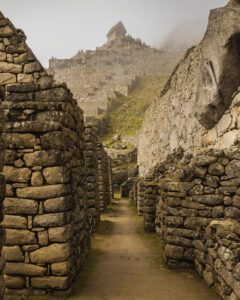 As with many ancient empires, the religion of the Incas was of utmost importance and interwoven with daily life. Their religion was polytheistic, venerating multiple gods and goddesses, of which most were linked to natural elements, such as Apu Illapu, the rain god, Ayar Cachi, god of earthquakes and most importantly, Inti, the sun god, whose elevated status made them the paramount deity.
The Inca believed their ruler, the Sapa Inca, was a direct descendant of Inti, endowing the ruler with divine authority and instilling the inviolable relationship between religion and governance.
Myths and stories were transferred orally until the Spanish recorded them, although there is some speculation that they were represented in quipus, the intricate method of knotting strings to archive information.
The Incas also believed in reincarnation and a concept similar to heaven in the afterlife; imagined to be an Earthly paradise free from suffering. In order to reach it, one would have to avoid being burned to, or after, death, as this would impede their passage to the afterlife.
Like most ancient theologies, they also believed in sacrificial offerings – while human sacrifice was infrequent compared to offerings of animals or goods, it still occurred, and served to symbolise the highest reverence to the gods during significant events or crises, affirming one’s devotion.
Fall of the Empire
The Incas paved the way for civilisations to come: their advancements in architecture, technology and the extent of their conquest remain a perennial subject of study. And yet, in the spirit of Ozymandias, their reign now reflects the transience of dominion – in the eyes of the relentless sculptor of time, all that rises must fall, leaving only the ruins of their impermanence.
The first domino to fall did so in 1526, upon the arrival of the Spanish conquistadors, led by Francisco Pizarro. Recognizing the wealth and potential riches of the land, Pizarro sought royal approval from Spain to conquer the region and serve as its viceroy, which was granted in 1529.
Returning in 1523, the Spanish returned to the empire to find it considerably weakened by a war of succession between Huáscar and Atahualpa, the sons of Sapa Inca Huayna Capac. The Introduction of European diseases such as smallpox and measles had also decimated large chunks of the native population, leading to the perfect conditions for a conquest.
The weapons and armour of the Spanish were considerably more advanced than those of the Incas, who had never encountered iron, steel or even horses. At the time, native cultures of North and South America were somewhere between the Stone and Bronze Age in terms of their weaponry – most foot soldiers carried clubs or maces, but none could truly penetrate the heavy armour of the conquistadors.
To make matters worse for the empire, many ethnic groups under Inca rule welcomed the Spanish as liberators as the civil conflict had caused many to become disillusioned with the power structure. It even seemed initially that the Spanish had no intention of altering or influencing the culture.
Unfortunately, following the fall of the empire, many elements of the culture were systematically destroyed. Many aspects of life Inca life remain a mystery to this day, as the missing links of information simply no longer exist. Spanish colonial policies continued to exploit Inca labour systems for mining, significantly affecting the native population.
The sense of mystery still wafts through the ruins of the former Inca Empire, our curiosity hasn’t waned, and hopefully, in time we will unearth even more artefacts and secrets about this glorious and ambitious civilisation. If you would like to hike the inimitable Inca Trail up to Machu Picchu itself, be sure to check out our related itinerary! For a more thorough firsthand account of the trail, as well as important information about how to book and prepare, check out our recent blog detailing our Managing Director, Felicia’s, exciting ascent!
If you’d like to contact us directly, either email us at enquiries@odyssey-world.co.uk or call us at +44 117 313 7070!
