

SHARE:
The ecological magic of Peru’s Potato Park
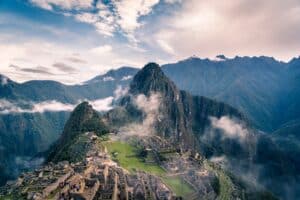
A land of exceptional beauty, history and culture, Peru is invariably featured on many of our travel bucket lists. From that which needs no introduction such as Machu Picchu and the grandeur of Inca ruins, to the gargantuan scale of the Amazon rainforest and the monolithic Andean Mountains.
Peru may be a world-renowned curator of illustrious sights and monuments, but its sustainability credentials are that for which it deserves merit, and for thematic purposes in parallel with our other blogs (such as this, this, and weirdly, this), such an ecological impetus can be typified by some unconventional methods…
Over 2,300 of the world’s 4,000 known potato varieties are grown in Peru’s preeminent potato park! The park is located within the Cusco Valley, covers a total of 9,280 hectares (35 sq. mile), and has a population of 3,880.
For seven millennia, the inhabitants of this high-altitude Sacred Valley of the Incas have cultivated and improved Andean potatoes. In fact, if you didn’t know already, the potato originated from this very location! The longevity of such a practice can be attributed to a holistic way of life that blends deep spiritual traditions and cultural values with cultivation techniques.

The spiritual element of this endeavour is not to be overlooked – the cultural emphasis lies on achieving a sense of ‘ayllu’ – which refers to the state of being in a reciprocal – even symbiotic – relationship with the environment and the spirit world.
While this may be at odds with modern secular views, its implementation has a powerful effect on preservation – incentivising farmers to respect and honour the environment that enriches them with crops; sustaining and cultivating its natural resources.
The potatoes are of a variety unseen anywhere else – almost every type of potato has a special or ceremonial use – potatoes to eat at baptisms, potatoes for funerals, potatoes for weddings etc. There are small, knobbly potatoes and long, thin, banana-shaped ones – all with different tastes and textures!
In recent decades, predatory corporations and organisations have increasingly sought to commodify said produce and industrialise the processes, likely harming the environment all the while.
To prevent such occurrences, the indigenous peoples of the Cusco Valley joined with a local nonprofit to develop the Indigenous Biocultural Heritage Area (IBCHA). The idea was to create a legal regime to preserve and promote native potato varieties and protect the fragile ecosystem by recognizing the role of indigenous “biocultural heritage” practices.
Unsurprisingly, this is in line with other preservation initiatives undertaken by Peruvian officials in recent years, including new restrictions on visiting Machu Picchu to help allay the risk of damage caused by years of foot traffic and deviations from the designated path, as well as measures taken to protect the large proportion of rainforest within the country.
Moreover, Peru is the only nation in the world hitting what the Worldwatch Institute calls “the sustainability sweet spot,” balancing both high levels of human development with environmentally sustainable levels of resource consumption – a proud accolade to hang on your wall!
In order to make sure your getaway is both thrilling and purposeful, Odyssey World has partnered with Amazonas Explorer, a responsible travel operator who specialise in custom and private adventures to Machu Picchu, rural Peru and the Amazon.
During the height of the pandemic two years ago, as the plight of travel workers grew exponentially, guides in Peru had to improvise: converting some of the unused land next to Lake Huaypo (previously used for kayaking and adventure tourism) into a functioning potato farm! Amazonas Explorer were one of the first travel companies to recognise the support their valuable staff needed during the devastating covid-19 pandemic, and their efforts to cross-train and support their staff makes them Sustainability Heroes in our eyes!
In Peru, the later months of the year are the dry season, representing the best time to travel. From the coastal lands of the capital and the dunes of Ica, crossing the Andes Mountain Range and up to the Amazon, this South American gem is an ecological champion and a cultural behemoth just waiting to be explored!
